
Menopause workplace legislation is coming…
Is your organization ready?
Menopause support is fast becoming an expectation for US employers. Partner with the pioneers of menopause workplace support to get it right — and stay ahead.




Seen in…


Why act now?
Across the United States, workplace expectations are shifting. While federal laws such as the ADA , EEOC guidance and the Pregnant Workers Fairness Act provide a foundation of protection, they do not explicitly address perimenopause or menopause.
As new legislation emerges at the state and local level, employers are beginning to see more explicit requirements take shape. Rhode Island has set a precedent as the first state to mandate workplace accommodations for menopause, with additional states and municipalities actively advancing similar legislation.
For employers, this introduces 3 clear expectations
1.
Protection from discrimination
Menopause may be explicitly protected and related symptoms may fall under existing protections tied to disability sex, and age
2.
Duty to provide reasonable accommodations
Employers are expected to respond with appropriate accommodations and a structured approach to support
3.
Expansion of insurance coverage and benefits
Growing expectations around access to menopause-related care and support through employer-sponsored plans
State of the nation
Menopause policy is rapidly emerging across the US, but it is still fragmented across three main areas of legislation :
- Workplace protections
- Health insurance coverage
- Education, research and awareness
US conversation is not developing in just one direction. It is evolving across employment law, workplace practice, paid leave, public health, clinician education, benefits access and gender equity .
Organizations do not just need help understanding the law — they need help understanding what supportive action looks like in practice.
Rhode Island Fair Employment Practices Act (amended to include menopause)
- Enacted: June 2025
- Key change: Explicitly adds menopause as a protected characteristic and requires reasonable accommodations in employment.
This is widely referenced as the first US state law explicitly protecting employees experiencing menopause.
Leading employers don’t wait for deadlines
Avoid risks
Menopause is moving from being a private, invisible issue to a recognised public policy, employment, health equity and workforce issue.
Gain benefits
Menopause is a retention, productivity and talent issue, not only a health issue. Supporting menopause provides huge benefits for organizations.
We make it easy for you to be ready for upcoming legislation …

Free readiness check
Understand why action matters now, evaluate your current approach and prepare to take clear, credible steps to align with emerging legislation.

Menopause Legislation Readiness Toolkit
Everything you need to design, develop and sense-check your approach in one practical, easy-to-use toolkit.

Menopause Friendly Membership
Membership gives you the Toolkit plus ongoing guidance, resources and recognition as a Menopause Friendly employer.

Receive US Guide, Rhode Island Guide and Philadelphia Guide straight to your inbox
Download our free “are you ready” guide…
Whether you’re just starting out or refining your approach, this guide highlights the strategic case for action, helps you assess your current position and prepares you for menopause in the workplace legislation.
Receive guide for US employers, plus specific guides for Rhode Island and Philadelphia straight to your inbox.
By downloading this free resource, you agree to join our mailing list. We don’t do spam, and you can unsubscribe at any time.
Menopause Legislation Readiness Toolkit
Free for Menopause Friendly members
Our Menopause Legislation Readiness Toolkit gives you everything you need to move from intention to implementation. Designed for busy employers, it combines expert guidance, practical templates and ready-to-use resources — so you can act with confidence.
Understand the requirements
Understand the key considerations and requirements to support compliance.
Audit what you have
Resources to help identify strengths and priority areas: ensuring your approach is evidence-based and realistic.
Strengthening policy
Guidance and checklist to ensure your menopause support is embedded within formal policies.
Building capability through training
Guidance and resources to review or design menopause training that builds confidence, awareness and consistency.
Engage your whole workforce
Recognize the important role to everyone has to play in creating an environment where people feel supported and free from discrimination.
Publishing and communicating
Guidance communicating you approach with clarity and confidence.
Legislation might be driving the conversation, but the real business case is commercial, cultural and human…
What’s included?
This is not just a template. It’s a practical framework to guide you from audit to publication.
Organization Guide
Key considerations to support compliance, while also highlighting the broader business benefits of taking a structured approach.
Legislation Readiness Audit Checklist
A structured review tool aligned to expected requirements — helping you identify strengths, gaps and priorities.
Policy & Guidance Review Support
Practical guidance on reviewing or creating menopause policy and ensuring it reflects lived experience — not just language.
Training & Capability Planning Resource
Helping you assess who needs what knowledge, at what level and when.
Resources to support your managers
Tools that strengthen manager capability, providing clear guidance alongside practical support for workplace conversations.
A Live, Updated Toolkit
As new insight, guidance and examples are released, they will be added — ensuring you remain up to date.
Access the Menopause Legislation Readiness Toolkit
Level 2 Menopause Friendly Members:
Not a Level 2 member?

Leading employers are Menopause Friendly members…


“Quote Lorem ipsum dolor sit amet, at mei dolore tritani repudiandae. In his nemore temporibus consequuntur, vim ad prima vivendum consetetur. Viderer feugiat at pro, mea aperiam”
Person, job title at company name
Not a member yet?
Join today for a huge range of genuinely helpful resources to support your journey, including…

Ready-to-use campaign packs
For key events including World Menopause Day, International Women’s Day and more.
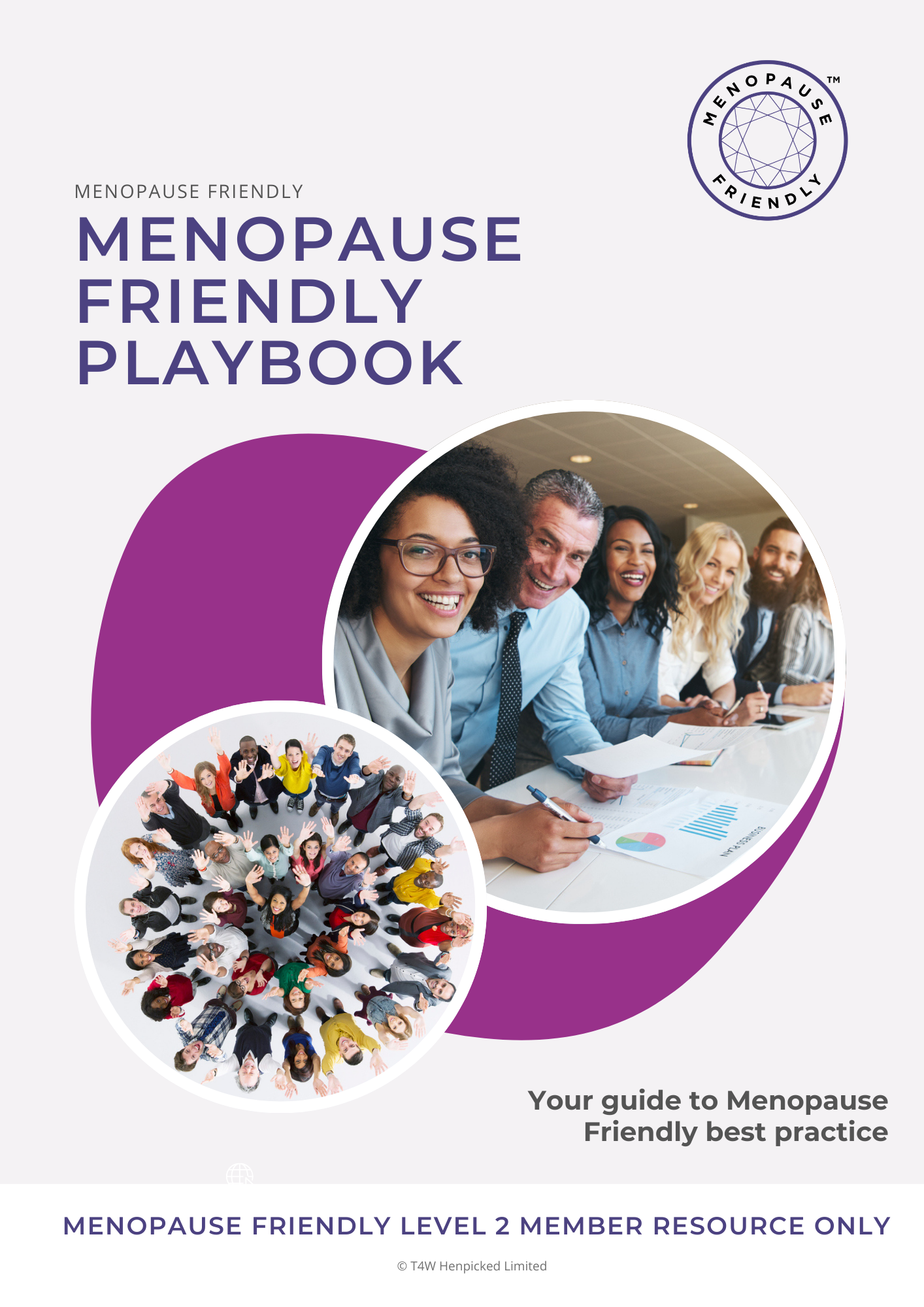
Menopause Friendly Playbook
Membership gives you the Toolkit plus ongoing guidance, resources and recognition as a Menopause Friendly employer.

Menopause Friendly Status
Gain committed status when you join and accredited status when you achieve accreditation.

Access to Menopause Action Plan Toolkit
Included in your membership at no additional cost.

Best-practice policy library and guidance
Learn from case studies and real policy documents shared. by fellow members.

Regular workshops and expert masterclasses
Workshops on each accreditation pillar, plus specialist expert masterclasses.
Menopause in the Workplace Training
Our CPD-accredited menopause training supports your Menopause Action Plan by building awareness, confidence and capability at every level of your organisation.
Trusted by leading employers, we combine lived insight with practical workplace expertise. Available as in-person sessions or webinars
For colleagues
Build understanding and reduce stigma across your workforce. This session increases awareness of menopause, its impact at work and how colleagues can offer informed, practical support.







Menopause Action Plans: FAQs
Answers to the most common questions we’re asked…
A Menopause Action Plan is a structured plan showing how your organisation supports colleagues experiencing menopause. It moves beyond policy to set out clear actions, accountability and measurable outcomes.
Under the Employment Rights Act, employers with 250 or more employees will be expected to publish their approach. This will be on a voluntary basis from Spring 2026 and become mandatory from Spring 2027 — making menopause support visible as well as meaningful.
A menopause policy explains your organisation’s approach and provides guidance.
A Menopause Action Plan goes further. It sets out the structured steps your organisation is taking to ensure menopause support is embedded in practice. It goes beyond a written statement to demonstrate how support is implemented and made visible across the organisation.
In simple terms, a policy is what your organisation says it does. An Action Plan shows how that support is put into practice and sustained
A good Menopause Action Plan is clear, deliberate and grounded in reality.
It should reflect what is genuinely happening in your organisation — not what you hope is happening or what looks good on paper.
It should demonstrate that menopause support is considered, structured and embedded. Above all, it should be something you can stand behind with confidence.
In other words, it’s not about producing a document. It’s about ensuring that what you publish truly reflects how your organisation supports colleagues experiencing menopause.
It depends on where you’re starting from.
If you already have structured menopause support in place, you may be able to develop a credible plan quickly. We know this will be an easy process for Menopause Friendly Accredited members.
If you need to review, strengthen or align existing practices, it will take much longer. What matters most is allowing enough time to do it properly. A Menopause Action Plan should reflect reality and withstand scrutiny
once it is visible.
Meaningful change cannot be rushed. That’s why the time to start is now — not when the deadline is approaching.
Developing a Menopause Action Plan is unlikely to sit with one individual alone. Senior leadership, HR or People teams, managers and employee representatives may all be involved. Where possible, input from colleagues with lived experience can add valuable insight.
Cross-functional involvement helps ensure the plan is realistic, aligned to how your organisation actually operates and sustainable over time.
Training is an essential part of making a Menopause Action Plan work in practice.
It builds knowledge, confidence and capability — not only for managers, but also for HR and occupational health professionals who play a key role in providing consistent, informed support.
Without that confidence and alignment, even the strongest policy or plan may never translate into meaningful action and support.
Effective training helps normalise conversations, reduce uncertainty and ensure support is handled appropriately and consistently across the organisation.
Publishing a Menopause Action Plan is one step. Demonstrating that it reflects real, measurable action is another.
Menopause Friendly Accreditation provides independent assurance that your menopause support meets recognised, evidence-based standards. Unlike a pledge or self-declaration, accreditation involves external assessment and review of evidence.
This gives employees, stakeholders and the wider public confidence that your commitment is structured, credible and genuinely embedded in practice.
For employers with 250 or more employees, doing nothing will not be an option once the requirement becomes mandatory.
The legal risk does not begin with the Employment Rights Act. Tribunal cases relating to menopause have already been rising and employees are increasingly aware of their rights.
As Menopause Action Plans become visible, organisations may face scrutiny not only from employees but also from trade unions, stakeholders and the media.
There is also a reputational risk in publishing a plan that does not reflect reality. Once support is made public, integrity matters.
Starting early gives you time to ensure what you publish is credible, aligned to practice and something you can stand behind with confidence.
If you have fewer than 250 employees, you are not required to publish a Menopause Action Plan under the current legislation.
However, menopause affects colleagues in organisations of every size. Smaller organisations often find they can move more quickly and embed supportive practices more easily.
A clear, simple framework helps ensure conversations are confident, support is consistent and managers know what to do.
Many smaller employers will choose to act voluntarily — not because they have to but because it strengthens retention, engagement and their reputation as a inclusive, caring and responsible employer.
Get in touch
Partner with the pioneers of menopause workplace support. Book a free consultation or send us a message to explore the best route for your organisation.
Send us a message
Just complete the form and a member of our expert team will be in touch very soon.
